CURRENT ISSUE
Watch Online the Live Sessions of ISWWTA 2015 Rishikesh on Youtube.Visit:https://www.youtube.com/user/ayushdarpan/
Previous issues of AYUSH DARPAN in Hindi is now available online visit:http://ayushdarpan.org

Search Engine

Friday, 1 March 2013

Pessimism is Good for Health

 Those who look at a half empty glass rather than a half full glass may turn out to be the healthier ones, according to a recent study. A recent study from University of Erlang-Nuremberg in Germany has found that pessimists may outlive optimists just because of their negative attitude.
 Pessimism is Good for HealthScientists revealed that those who have a negative approach to life and a bleak outlook may be able to live longer than optimists, a study found. This is because pessimists experience fear of the future and are often plagued by negative thoughts. This reduces their expectations of life and makes them nurture realistic ambitions. 
A study of 40,000 people has revealed that those who are extremely optimistic are associated with enhanced risk of disability and death. 
'Our findings revealed that being overly optimistic in predicting a better future was associated with a greater risk of disability and death within the following decade. Pessimism about the future may encourage people to live more carefully, taking health and safety precautions. People who were 'overly optimistic' about the days ahead had a greater risk of disability or death within ten years. These findings shed new light on how our perspectives can either help or hinder us in taking actions that can help improve our chances of a long healthy life,' said author Frieder R.Lang. 
Source:University of Erlang-Nuremberg 

Researcher Reports on the Dietary Causes of Heart Disease

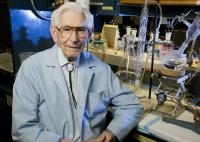
 Researcher Reports on the Dietary Causes of Heart DiseaseA 98-year-old researcher argues that, contrary to decades of clinical assumptions and advice to patients, dietary cholesterol is good for your heart.Unless that cholesterol is unnaturally oxidized (by frying foods in reused oil, eating lots of polyunsaturated fats, or smoking).The researcher, Fred Kummerow, an emeritus professor of comparative biosciences at the University of Illinois, has spent more than six decades studying the dietary factors that contribute to heart disease. In a new paper in the American Journal of Cardiovascular Disease, he reviews the research on lipid metabolism and heart disease with a focus on the consumption of oxidized cholesterol - in his view a primary contributor to heart disease. 
"Oxidized lipids contribute to heart disease both by increasing deposition of calcium on the arterial wall, a major hallmark of atherosclerosis, and by interrupting blood flow, a major contributor to heart attack and sudden death," Kummerow wrote in the review. Over his 60-plus-year career, Kummerow has painstakingly collected and analyzed the findings that together reveal the underlying mechanisms linking oxidized cholesterol (and trans fats) to heart disease. 
Many of Kummerow's insights come from his relentless focus on the physical and biochemical changes that occur in the arteries of people with heart disease. For example, he has worked with surgeons to retrieve and examine the arteries of people suffering from heart disease, and has compared his findings with those obtained in animal experiments. 
He and his colleagues first reported in 2001 that the arteries of people who had had bypass operations contained elevated levels of sphingomyelin (SFING-oh-my-uh-lin), one of several phospholipids (phosphate-containing lipids) that make up the membranes of all cells. The bypass patients also had significantly more oxidized cholesterols (oxysterols) in their plasma and tissues than people who had not been diagnosed with heart disease. 
Human cells incubated with the blood plasma of the cardiac patients also picked up significantly more calcium from the culture medium than cells incubated in the plasma of healthy patients. When the researchers added oxysterols to the healthy plasma, the proportion of sphingomyelin in the cells increased, as did the uptake of calcium. 
Earlier research, including studies conducted by medical pioneer Michael DeBakey, noted that the most problematic plaques in patients with heart disease occurred at the branch-points of the arteries of the heart. Kummerow followed up on these reports by looking at the phospholipid content of the arterial walls in pigs and humans. He found and reported in 1994 that the branch points of the arteries in humans and in swine also had significantly more sphingomyelin than other regions of the same arteries. 
For Kummerow, the increase in sphingomyelin was a prime suspect in the blocked and calcified arteries of the cardiac patients. He had already found that the arteries of the newborn human placenta contained only about 10 percent sphingomyelin and 50 percent phosphatidylcholine (FOSS-fuh-tih-dul-COH-lean), another important phospholipid component of cell membranes. 
"But when we looked at the arteries of people who had had bypass operations, we found up to 40 percent sphingomyelin and about 27 percent phosphatidylcholine," Kummerow said. "It took us many more years to discover that when you added large amounts of oxysterols to the cells, then the phosphatidylcholine changed to sphingomyelin." 
Further evidence supported sphingomyelin's starring role in atherosclerosis. When Kummerow and his colleagues compared the blocked and unblocked arteries of patients needing second bypass operations, they found that the arteries with blockages contained twice as much sphingomyelin as the unblocked arteries. The calcium content of the blocked arteries (6,345 parts per million) was also much higher than that of the unblocked arteries (182 ppm). 
Other studies had demonstrated a link between increases in sphingomyelin and the deposit of calcium in the coronary arteries. The mechanism by which this occurred was unclear, however. Kummerow's team searched the literature and found a 1967 study that showed that in the presence of certain salts (in the blood, for example), lipids like sphingomyelin develop a negative charge. This explains the attraction of the positively charged calcium to the arterial wall when high amounts of sphingomyelin are present, Kummerow said. 
"So there was a negative charge on the wall of this artery, and it attracted calcium from the blood until it calcified the whole artery," he said. 
Oxidized fats contribute to heart disease (and sudden death from heart attacks) in an additional way, Kummerow said. He and his collaborators found that when the low-density lipoprotein (LDL, the so-called "bad cholesterol") is oxidized, it increases the synthesis of a blood-clotting agent, called thromboxane, in the platelets. 
If someone eats a diet rich in oxysterols and trans fats and also smokes, he or she is endangering the heart in three distinct ways, Kummerow said. The oxysterols enhance calcification of the arteries and promote the synthesis of a clotting agent. And the trans fats and cigarette smoke interfere with the production of a compound, prostacyclin, which normally keeps the blood fluid. 
"And that causes 600,000 deaths in this country each year," Kummerow said. 
Kummerow is the author of "Cholesterol Won't Kill You, But Trans Fats Could." 

Source:American Journal of Cardiovascular Disease 
 

Monday, 25 February 2013

In Human Brain, Conductor of Speech Uncovered

The neurological basis of speech motor control, the complex coordinated activity of tiny brain regions that controls our lips, jaw, tongue and larynx as we speak, is being uncovered by researchers.The discovery has potential implications for developing computer-brain interfaces for artificial speech communication and for the treatment of speech disorders. 
It also sheds light on an ability that is unique to humans among living creatures but poorly understood. 
"Speaking is so fundamental to who we are as humans - nearly all of us learn to speak. But it's probably the most complex motor activity we do," said senior author Edward Chang, MD, a neurosurgeon at the UCSF Epilepsy Center and a faculty member in the UCSF Center for Integrative Neuroscience. 
The complexity comes from the fact that spoken words require the coordinated efforts of numerous "articulators" in the vocal tract - the lips, tongue, jaw and larynx - but scientists have not understood how the movements of these distinct articulators are precisely coordinated in the brain. 
To understand how speech articulation works, Chang and his colleagues recorded electrical activity directly from the brains of three people undergoing brain surgery at UCSF, and used this information to determine the spatial organization of the "speech sensorimotor cortex," which controls the lips, tongue, jaw, larynx as a person speaks. This gave them a map of which parts of the brain control which parts of the vocal tract. 
They then applied a sophisticated new method called "state-space" analysis to observe the complex spatial and temporal patterns of neural activity in the speech sensorimotor cortex that play out as someone speaks. This revealed a surprising sophistication in how the brain's speech sensorimotor cortex works. 
They found that this cortical area has a hierarchical and cyclical structure that exerts a split-second, symphony-like control over the tongue, jaw, larynx and lips. 
"These properties may reflect cortical strategies to greatly simplify the complex coordination of articulators in fluent speech," said Kristofer Bouchard, PhD, a postdoctoral fellow in the Chang lab who was the first author on the paper. 
The research was described this week in the journal Nature.
Source-ANI


Sleep-deprived Men Eat More

Men who stay awake all night tend to consume bigger portions of calorie-dense foods the next day, say researchers.Researchers from Uppsala University in Sweden analysed the eating patterns of 16 normal-weight males under buffet-like conditions after they were deprived of sleep all night, following a night of a solid eight-hour rest. 
Respondents were asked to select their portion sizes of seven meals and six snack items in both states. 
Lead researcher Pleunie Hogenkamp said that after a night of total sleep loss, the sleep-deprived males chose greater portion sizes of the energy-dense foods. 
He told the New York Daily News that males did so both before and after a breakfast, suggesting that sleep deprivation enhanced their food consumption regardless of satiety. 
The study has been published online in the journal Psychoneuroendocrinology.
Source-ANI
 

Can Qigong Reduce Cocaine Cravings in Early Addiction Recovery?


Cocaine is one of the most addictive drugs of abuse. Few effective treatments are available to help control cravings and withdrawal symptoms among individuals undergoing therapy to overcome cocaine abuse. Promising results from a study of qigong therapy are published in The Journal of Alternative and Complementary Medicine, a peer-reviewed journal from Mary Ann Liebert, Inc., publishers. The article is available on theJournal website.Individuals undergoing residential substance abuse treatment who received qigongtherapy, compared to a similar duration of sham treatment, reported significantly reduced cravings for cocaine in response to viewing and handling items related to cocaine use. The qigong treatment group were also significantly less likely to have symptoms of depression than the sham treatment group.In the article "A Pilot Study of Qigong for Reducing Cocaine Craving Early in Recovery," David Smelson, PsyD, David Eisenberg, MD, and coauthors demonstrate the feasibility of delivering external qigong therapy (EQT) to a population of recently abstinent cocaine-dependent individuals. In EQT, a trained qigong practitioner using focused intention directs and unblocks bioenergy (qi) to help an individual achieve balance that facilitates healing and equilibration in withdrawal. "This early work may have profound consequences in drug rehabilitation programs, and certainly deserves further focused and rigorous evaluation," says Editor-in-Chief Kim A. Jobst, MA, DM, Functional Shift Consulting Ltd., Hereford, U.K.
About the Journal
The Journal of Alternative and Complementary Medicine is a monthly peer-reviewed journal publishing observational, clinical, and scientific reports and commentary intended to help healthcare professionals and scientists evaluate and integrate therapies into patient care protocols and research strategies. Complete tables of content and a sample issue may be viewed on the Journal website.
About the PublisherMary Ann Liebert, Inc., publishers is a privately held, fully integrated media company known for establishing authoritative peer-reviewed journals in many promising areas of science and biomedical research, including Alternative and Complementary Therapies, Medical Acupuncture, and Journal of Medicinal Food. Its biotechnology trade magazine, Genetic Engineering & Biotechnology News (GEN), was the first in its field and is today the industry’s most widely read publication worldwide. A complete list of the firm’s 70 journals, books, and newsmagazines is available on the Mary Ann Liebert, Inc., publishers website.
Source:Eurekalert

Virus shows promise as prostate cancer treatment


A recombinant Newcastle disease virus kills all kinds of prostate cancer cells, including hormone resistant cells, but leaves normal cells unscathed, according to a paper published online ahead of print in the Journal of Virology. A treatment for prostate cancer based on this virus would avoid the adverse side effects typically associated with hormonal treatment for prostate cancer, as well as those associated with cancer chemotherapies generally, says corresponding author Subbiah Elankumaran of Virginia Polytechnic Institute, Blacksburg. The modified virus is now ready to be tested in preclinical animal models, and possibly in phase I human clinical trials.
Newcastle disease virus kills chickens, but does not harm humans. It is an oncolytic virus that hones in on tumors, and has shown promising results in a number of human clinical trials for various forms of cancer. However, successful treatments have required multiple injections of large quantities of virus, because in such trials the virus probably failed to reach solid tumors in sufficient quantities, and spread poorly within the tumors.
The researchers addressed this problem by modifying the virus's fusion protein. Fusion protein fuses the virus envelope to the cell membrane, enabling the virus to enter the host cell. These proteins are activated by being cleaved by any of a number of different cellular proteases. They modified the fusion protein in their construct such that it can be cleaved only by prostate specific antigen (which is a protease). That minimizes off-target losses, because these "retargeted" viruses interact only with prostate cancer cells, thus reducing the amount of virus needed for treatment.
Retargeted Newcastle disease virus has major potential advantages over other cancer therapies, says Elankumaran. First, its specificity for prostate cancer cells means it would not attack normal cells, thereby avoiding the various unpleasant side effects of conventional chemotherapies. In previous clinical trials, even with extremely large doses of naturally occurring strains, "only mild flu-like symptoms were seen in cancer patients," says Elankumaran. Second, it would provide a new treatment for hormone-refractory patients, without the side effects of testosterone suppression that result from hormonal treatments.
About one man in six will be diagnosed with prostate cancer, and one in 36 will die of this disease. Men whose prostate cancer becomes refractory to hormone treatment have a median survival of about 40 months if they have bone metastases, and 68 months if they do not have bone metastases.
Source:American Society for Microbiology 

Study reveals stem cells in a human parasite

Adult Male SchistosomeThe researchers discovered that Schistosoma mansoniharbors a population of non-sexual stem cells (yellow dots dispersed throughout the organism) that replenish its tissues and contribute to its ability to live in its host for decades.A new study offers insight into the cellular operations that give this flatworm its extraordinary staying power. The researchers, from the University of Illinois, demonstrated for the first time that S. mansoniharbors adult, non-sexual stem cells that can migrate to various parts of its body and replenish tissues. Their report appears in the journal Nature.
According to the World Health Organization, more than 230 million people are in need of treatment for Schistosoma infections every year. Most live in impoverished areas with little or no access to clean water. Infection with the worm (also known as a blood fluke) can lead to damaging inflammation spurred by the presence of the worm’s eggs in human organs and tissues.“The female lays eggs more or less continuously, on the order of hundreds of eggs per day,” said U. of I. cell and developmental biology professor and Howard Hughes Medical Institute InvestigatorPhillip Newmark, who led the study with postdoctoral researcher James J. Collins III.
“The eggs that don’t get excreted in the feces to continue the life cycle actually become embedded inside host tissues, typically the liver, and those eggs trigger a massive inflammatory response that leads to tissue damage.”
Children are especially vulnerable to the effects of infection, in some cases experiencing delays in growth and brain development as a result of chronic inflammation brought on by the parasites.
The new study began with an insight stemming from years of work on a different flatworm, the planarian, in Newmark’s lab. Collins thought that schistosomes might make use of the same kinds of stem cells (called neoblasts in planarians) that allow planarians to regenerate new body parts and organs from even tiny fragments of living tissue.
“It just stood to reason that since schistosomes, like planaria, live so long that they must have a comparable type of system,” Collins said. “And since these flatworms are related, it made sense that they would have similar types of cells. But it had never been shown.”
In a series of experiments, Collins found that the schistosomes were loaded with proliferating cells that looked and behaved like planarian neoblasts, the cells that give them their amazing powers of regeneration. Like neoblasts, the undifferentiated cells in the schistosomes lived in the mesenchyme, a kind of loose connective tissue that surrounds the organs. And like neoblasts, these cells duplicated their DNA and divided to form two “daughter” cells, one of which copied its DNA again, a process that normally precedes cell division.
“Stem cells do two things,” Newmark said. “They divide to make more stem cells and they give rise to cells that can differentiate.”
Collins had labeled the cells with fluorescent markers. This allowed him to watch how they behaved. He noted that over the course of a few days, some of the labeled cells migrated into the gut or muscle, to become part of those tissues.
“We label the cells when they’re born and then we see what they grow up to become,” Collins said. “This is not conclusive evidence that these cells are equivalent to the planarian neoblasts, but it is consistent with the hypothesis that they are.”
The researchers went deeper, determining which genes were turned on or off, up or down in the proliferating cells as compared with the non-dividing cells. They identified a gene in the proliferating cells that coded for a growth factor receptor very similar to one found in planarians. When the researchers switched off the parasite’s ability to make use of this gene (using a technique called RNA interference in worms grown in the lab), the proliferating cells gradually died out.
“We postulated that these cells are important for the longevity of the parasite,” Collins said. “Now we can start asking which genes regulate these cells.” 
“We started with the big question: How does a simple parasite survive in a host for decades?” Newmark said. “That implies that it has ways of repairing and maintaining its tissues. This study gives us insight into the really interesting biology of these parasites, and it may also open up new doors for making that life cycle a lot shorter.”
Source:News Bureau University of Illinois

Facebook Badge

PAGE COUNTER