CURRENT ISSUE
Watch Online the Live Sessions of ISWWTA 2015 Rishikesh on Youtube.Visit:https://www.youtube.com/user/ayushdarpan/
Previous issues of AYUSH DARPAN in Hindi is now available online visit:http://ayushdarpan.org

Search Engine

Thursday, 10 December 2015

World’s First Dengue Vaccine Approved by Mexico

The dengue vaccine Dengvaxia, manufactured by Sanofi, has been approved by Mexico for prevention of the deadly mosquito-borne disease. This approval makes it the first vaccine in the world to prevent dengue, thereby bringing fruit to the 20-year effort of the drug company to produce the vaccine. It marks a major advance in medicine, with dengue joining the list of vaccine-preventable diseases.
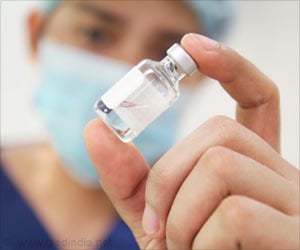
 World’s First Dengue Vaccine Approved by MexicoDengue has assumed endemic proportions in several parts of the world, claiming a huge number of lives every year. It is no longer limited to the tropics, but has spread far and wide to other regions as well. The virus that causes dengue spreads through the bite of the Aedes aegypti mosquito. The fever results in symptoms of severe joint and muscle pains. Several patients succumb to complications like shock or dengue hemorrhagic fever. With no definite antiviral treatment available against the virus as yet, a vaccine currently seems to offer the best option to deal with the infection. 

 
The Dengvaxia vaccine has been approved by Mexico's Federal Commission for the Protection against Sanitary Risk for the prevention of dengue for people ranging from 9 to 45 years. 

Since a vaccine is administered to people who are healthy, it is important that besides being effective, it should not cause any side effects. The vaccine has been found to be safe in large clinical trials prior to its approval. It provides protection against all 4 variants of the dengue virus. Though it has not found to be 100% effective, it will hopefully reduce the number of affected people and thereby the transmission of the infection. 

The approval for the dengue vaccine in Mexico will hopefully be a major boost to the global efforts involved in the prevention of dengue. 
 News Desk

Wednesday, 9 December 2015

Researchers Identify 30 Key Genes for Longer, Healthier Life

Researchers have zeroed in on 30 genes which, if tweaked a bit, can get you eternal youth - without having to search for and drink that elusive elixir of life. The team revealed that one of these genes proved to be particularly influential - the bcat-1 gene.
 Researchers Identify 30 Key Genes for Longer, Healthier Life

 
Michael Ristow, professor of energy metabolism at the Swiss Federal Institute of Technology in Zurich (ETH Zurich), said, "When we blocked the effect of this gene, it significantly extended the mean lifespan of the nematode by up to 25%." 

‘One of the 30 genes that have been identified - namely the bcat-1 gene - proved to be particularly influential in extending the mean lifespan of a nematode by up to 25%. The findings could influence how age-related diseases such as diabetes or high blood pressure could be prevented.’
Ristow has no doubt that the same mechanism occurs in humans. He said, "We looked only for the genes that are conserved in evolution and, therefore, exist in all organisms, including humans." 

The bcat-1 gene carries the code for the enzyme of the same name which degrades so-called branched-chain amino acids that naturally occurs in food protein building blocks. 

When the researchers inhibited the gene activity of bcat-1, the branched-chain amino acids accumulated in the tissue, triggering a molecular signalling cascade that increased longevity in the nematodes. Moreover, the time span during which the worms remained healthy was extended. 

The study that involved researchers from JenAge consortium from Jena in Zurich said, "As a measure of vitality, the researchers measured the accumulation of aging pigments, the speed at which the creatures moved, and how often the nematodes successfully reproduced. All of these parameters improved when the scientists inhibited the activity of the bcat-1 gene." 

In order to detect these genes, the researchers combed through 40,000 genes in the nematode C. elegans, zebra fish and mice. The multiple branched-chain amino acids are already being used to treat liver damage and are also added to sport nutrition products. 

The authors said, "However, the point is not for people to grow even older, but rather to stay healthy for longer." 

The study, published in the Nature Communication, will deliver important indicators on how the aging process could be influenced and how age-related diseases such as diabetes or high blood pressure could be prevented.

Source: IANS
 

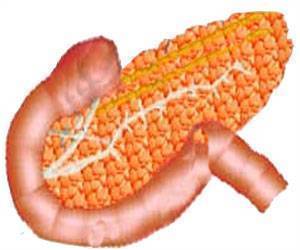
Losing One Gram Fat from Pancreas can Reverse Type 2 Diabetes

Previous research has suggested that Type-2 diabetes is caused by fat accumulating in the pancreas. A new study has now revealed that losing less than one gram of that fat through weight loss could reverse the condition.
 Losing One Gram Fat from Pancreas can Reverse Type 2 Diabetes

 
Lead researcher Roy Taylor from Newcastle University in England said, "For people with Type-2 diabetes, losing weight allows them to drain excess fat out of the pancreas and allows function to return to normal. So if you ask how much weight you need to lose to make your diabetes go away, the answer is one gram! But that gram needs to be fat from the pancreas. At present the only way we have to achieve this is by calorie restriction by any means - whether by diet or an operation." 

‘Excess fat in diabetic pancreas is specific to Type-2 diabetes and prevents insulin being made as normal. When that excess fat is removed, insulin secretion increases to normal levels, and people become diabetes free.’
For the study, 18 people with Type-2 diabetes and nine people who did not have diabetes were measured for weight, fat levels in the pancreas and insulin response before and after bariatric surgery. The patients with Type-2 diabetes had been diagnosed for an average of 6.9 years. The people with Type-2 diabetes were found to have increased levels of fat in the pancreas. 

The participants in the study had all been selected to have gastric bypass surgery for obesity and were measured before the operation then again eight weeks later. After the operation, those with Type-2 diabetes were immediately taken off their medication. 

Both groups lost the same amount of weight, around 13% of their initial body weight. Critically, the pool of fat in the pancreas did not change in the non-diabetics but decreased to a normal level in those with Type-2 diabetes. The researchers said, "This shows that the excess fat in the diabetic pancreas is specific to Type-2 diabetes and important in preventing insulin being made as normal. When that excess fat is removed, insulin secretion increases to normal levels. In other words, they were diabetes free." 

The study appears online in Diabetes Care.

Source: IANS
 

Why Some People are Unable to Use Facial Features to Recognize a Person

 Why Some People are Unable to Use Facial Features to Recognize a PersonPeople with congenital prosopagnosia, or face blindness, are unable to use facial features to identify the person in front of them. Until now, the cause of facial blindness was assumed to be associated with the later stages of the perceptual process. However, a new study has now revealed that the causes of congenital face blindness can be traced back to an early stage in the perceptual process.

 
Lead researcher Andreas Luschow from Charite hospital in Berlin said, "We were able to show that even the earliest face-selective responses, those recorded approximately 170 milliseconds after seeing a face, are altered in people with congenital prosopagnosia. We were also able to show that these changes are closely linked to their deficit in recognizing faces."

‘The causes of congenital face blindness can be traced back to an early stage in the perceptual process. And even life-long contact with other people does not enable affected persons to compensate for this face recognition deficit.’

 
Results showed that even life-long contact with other people does not enable affected persons to compensate for this face recognition deficit. This would suggest that the underlying neural mechanisms are divided into distinct, closed units, making it impossible for other areas of the brain to take over their function. 

A better understanding of cognitive processes is not only important in the field of medicine, but also in other areas of research, such as robotics, where such knowledge may be able to provide 'biological inspiration' for the development and improvement of technological systems. 

The findings were published in PLOS ONE.

Source: IANS
 

New Technique to Ramp Up the Conversion of Skin Cells into Dopamine Neurons

 New Technique to Ramp Up the Conversion of Skin Cells into Dopamine NeuronsParkinson's disease occurs when neurons in an area of the brain that controls movement become impaired or die. Normally, these nerve cells produce an important brain chemical known as dopamine. But when they die or become impaired, they produce less dopamine. For decades, researchers have been finding a way to repair faulty dopamine neurons and put them back into Parkinson's patients, where they will start producing dopamine again. Now, Parkinson's disease researchers have developed a way to ramp up the conversion of skin cells into dopamine neurons.


Previously, researchers have used fetal material, which is difficult to obtain and of variable quality. Embryonic stem cells represented a tremendous innovation, but making dopamine neurons from stem cells is a long process with a low yield. These issues have driven researchers to try to develop ways to turn cells that are easy to obtain, such as skin cells, into dopamine neurons, which are normally hidden in the brain. But here, too, it has been difficult to obtain sufficient quantities of neurons. 

 
‘Parkinson's disease researchers have developed a way to ramp up the conversion of skin cells into dopamine neurons. This discovery enables researchers to generate patient-specific neurons in a dish that could then be transplanted into the brain to repair the faulty neurons.’
 he researchers at the Jacobs School of Medicine and Biomedical Sciences at the University at Buffalo have identified - and found a way to overcome - a key obstacle to such cellular conversions. At the same time, the researchers say the finding has profound implications for changing the way scientists work with all cells. 

The new research is published in Nature Communications. It revolves around their discovery that p53, a transcription factor protein, acts as a gatekeeper protein. 

Jian Feng, senior author and professor in the Department of Physiology and Biophysics in the Jacobs School of Medicine and Biomedical Sciences at UB, said, "We found that p53 tries to maintain the status quo in a cell, it guards against changes from one cell type to another. We found that p53 acts as a kind of gatekeeper protein to prevent conversion into another type of cell. Once we lowered the expression of p53, then things got interesting: We were able to reprogram the fibroblasts into neurons much more easily. The advance has importance to basic cell biology." 

Feng further added, "This is a generic way for us to change cells from one type to another. It proves that we can treat the cell as a software system, when we remove the barriers to change. If we can identify transcription factor combinations that control which genes are turned on and off, we can change how the genome is being read. We might be able to play with the system more quickly and we might be able to generate tissues similar to those in the body, even brain tissue. People like to think that things proceed in a hierarchical way, that we start from a single cell and develop into an adult with about 40 trillion cells, but our results prove that there is no hierarchy. All our cells have the same source code as our first cell; this code is read differently to generate all types of cells that make up the body." 

Feng said, "We found that the point in the cell cycle just before the cell tries to sense its environment to ensure that all is ready for duplicating the genome, is the prime time when the cell is receptive to change. By lowering the genomic gatekeeper p53 at the right time of cell cycle, they could easily turn the skin cells into dopamine neurons, with transcription factor combinations discovered in previous studies. These manipulations turn on the expression of Tet1, a DNA modification enzyme that changes how the genome is read. Our method is faster and much more efficient than previously developed ones. The best previous method could take two weeks to produce 5% dopamine neurons. With ours, we got 60% dopamine neurons in ten days." 

The researchers have done multiple experiments to prove that these neurons are functional mid-brain dopaminergic neurons, the type lost in Parkinson's disease. The finding enables researchers to generate patient-specific neurons in a dish that could then be transplanted into the brain to repair the faulty neurons. It can also be used to efficiently screen new treatments for Parkinson's disease.

Source: Eurekalert


Saturday, 31 October 2015

Two-thirds of People Under 50 Years of Age Have Herpes: WHO Report

 Two-thirds of People Under 50 Years of Age Have Herpes: WHO ReportThere are two forms of the herpes virus- HSV-1 mainly causes cold sores and blisters around the mouth, as opposed to HSV-2, which is almost entirely sexually transmitted and causes genital herpes. A World Health Organization (WHO) report revealed that more than 3.7 billion people under 50 have the highly-infectious and incurable herpes virus that causes sores around the mouth and sometimes on the genitals. The report also suggested that two thirds of the global population under the age of 50 years are infected with the herpes simplex virus type 1 (HSV-1), which tends to cause cold sores.

 
A full 87% of Africans under 50 years have the virus which is transmitted by mouth-to-mouth contact or through saliva, as do three quarters of those in the eastern Mediterranean and western Pacific regions. In comparison, only 39% of men and 49% of women in the Americas, and 61% of men and 69% of women in Europe have the virus. 

WHO medical officer Sami Gottlieb said, "But new estimates indicate HSV-1 is also an important cause of genital herpes, with some 140 million people between the ages of 15 and 49 infected with a genital variant of HSV-1. HSV-1 has the potential to be transmitted from the oral area to the genital area through oral sex." 

Along with the 417 million people believed to have the HSV-2 infection, there are more than half a billion people under 50 years of age who have genital infections caused by the two herpes viruses. 

The WHO noted that in high-income countries, fewer children are becoming infected with HSV-1 due to better hygiene and living conditions, but are thus more susceptible to becoming infected with the virus once they become sexually active. 

Marleen Temmerman, head of the WHO's reproductive health and research division, said, "Access to education and information on both types of herpes and sexually transmitted infections is critical to protect young people's health before they become sexually active." 

Gottlieb said, "The figures were deeply worrying, not only because such infections were uncomfortable but because they could also harm relationships and cause social stigma. HSV-2 infections - even when there are no symptoms - have also been shown to increase the risk of HIV transmission. With no cure available for either herpes virus we really need to accelerate the development of vaccines."

Source: AFP


Antioxidant Capacity of the Gooseberry Fruit Discovered

Researchers from the department of food science, food engineering school, Campinas State University in Brazil, found that gooseberries, their skin and pulp contained higher levels of antioxidant activity than other types of berries, such as blueberries and cranberries.
The purple, shiny berry is produced in the southwest tropics of Brazil and it is commonly used for making jams, jellies, drinks and it is also sold as a fresh fruit. 

The researchers found that gooseberries contain high levels of phytochemicals. Phytochemicals are chemical compounds that occur naturally in plants. Some phytochemicals are responsible for color and other development properties, such as the deep purple of blueberries and the smell of garlic, for instance. 

Phytochemicals have been reported to prevent oxidative stresses that can lead to cancer and heart disease. Gooseberry skin could potentially be a source of natural colorants and antioxidants for use in food manufacturing. The study was published by the Institute of Food Technologists (IFT).

 
Institute of Food Technologists (IFT).

Facebook Badge

PAGE COUNTER