Three out of every four U.S. health-care workers use some form of complementary or alternative medicine or practice to help stay healthy, a new report shows.
What's more, doctors, nurses and their assistants, health technicians, and healthcare administrators were actually more likely than the general public to use any number of wide-ranging alternative medicine options, including massage, yoga, acupuncture, Pilates or herbal medicines.
"No one has really done this sort of analysis before, so when I saw our results I was authentically surprised," acknowledged study co-author Lori Knutson, executive director of the Penny George Institute for Health and Healing with the Allina Health System in Minneapolis. "But pleasantly so. Because clearly this means that even our health-care workers are recognizing the need for alternative options in the search for ways to improve our health and lives."
Knutson and her colleagues reported their findings this month in the journal Health Services Research.
According to the U.S. National Center for Complementary and Alternative Medicine (part of the National Institutes of Health), about 38 percent of Americans currently avail themselves of some form of complementary/alternative medicine, which can also include dietary supplements, meditation, chiropractic services, Pilates, and Ayurvedic and traditional Chinese medicine.
The poll data, collected in 2007 as part of the National Health Interview Survey, looked at use among a nationally representative sample of more than 14,300 working adults 18 years old and up. About 1,300 of those surveyed were health-care providers and workers employed in either a hospital or ambulatory environment.
The survey covered 36 different forms of options, including therapies involving body manipulation, mind-body and biological-based therapies, and energy-healing treatments.
Doctors and nurses were found to be more than twice as likely as non-clinical health-care support workers to have tried out a practitioner-based complementary or alternative medicine service (such as a chiropractor) in the past year.
They were also almost three times as likely to have "self-treated" using complementary/alternative approaches versus their technical or administrative colleagues.
Overall, health-care workers were found to be bigger users of complementary/alternative medicine than those outside the health-care industry. Seventy-six percent of health-care workers said they had used such methods in the past year, compared to 63 percent of people working in non-healthcare fields.
And even when diets, vitamins, minerals, and/or herbal supplements were excluded from the range of options, health-care workers were still significantly more likely to have tried out a complementary medicine product or service over the prior year than the general public (41 percent versus 30 percent.)
But the reasons health-care workers turned to alterative/complementary medicine were similar to those seen elsewhere, with back, neck and joint pain being the three most prevalent concerns.
"In general, Western culture has believed that complementary services and techniques aren't as well-researched and evidence-based as conventional medicine," noted Knutson. "But that is certainly no longer the case. And so what I hope comes from this insight into practitioner use of complementary options is an opening up of the conversation between providers and patients about the use and potential of alternative medicine."
Judy Blatman, a spokeswoman for the Washington, D.C.-based Council for Responsible Nutrition, which represents the supplements industry, seconded that notion.
"These results are not surprising, as in fact we've had similar findings looking at health-care practitioner attitudes and uses regarding dietary supplements," she noted. "So this is consistent with out own research."
"And I would agree," said Blatman, "that seeing that the very people who are considered to be the leaders in health are themselves more and more willing to go beyond what was a traditional model of treatment could be very helpful to consumers. Because we find that often patients feel uncomfortable talking to their providers about non-traditional disciplines for fear of being discounted. So this should put everyone more at ease."
Experts typically advise that any patient who turned to an alternative or complementary therapy first consult with their doctor.
Because dietary supplements are not regulated by the U.S. Food and Drug Administration in the same way traditional medicines are, and some supplements interact with traditional medicines, patients should also talk with their doctors before taking supplements and keep their physicians current on any supplements or alternative medicines they are using.
More information
For more on complementary and alternative medicine, visit the U.S. National Center for Complementary and Alternative Medicine.
Friday, 26 August 2011


Homeopathy new ray of hope in dengue-hit districts
While the authorities continue to battle increasing cases of dengue, which has no known vaccine, homeopathy practitioners are cashing in on the situation and are selling 'preventive' medicines in Dhenkanal. People from Angul and Dhenkanal district seem to be making a beeline for homeopathy clinics to buy medicines to prevent the vector-borne disease.
Homeopathy doctors claim preventive medicines like Eupatorium Prof-200 can boost the resistance of the body and help fight against dengue. Allopathic doctors of several government hospitals, however, said there are no preventive medicines for dengue. The only precautionary measure one can take is maintain hygiene in and around the house.
As many as 600 families from Dhenkanal and Angul district have purchased such homeopathic medicines in the last five days, said Dr Kunja Bihari Raj of Sriram Homeo Clinic. "Though there are no proper medicines for dengue, I am giving Eupatorium Prof-200 to people who have symptoms such as dengue-like high fever, frontal headache, bleeding from the nose etc. The medicine helps the body develop resistance power against dengue. Till today, no patient who has taken the medicine has been infected with the dengue virus," he claimed.
Another doctor, Bhabani Shankar Das of Life Care Homeo Clinic said, "We are prescribing Eupatorium Prof-200 as a preventive medicine for dengue. More than 200 patients have bought it from us this week."
Rekha Sahoo, a Dhenkanal resident who decided to give the homeopathic medicine a shot, said, "I consulted a homeopathic doctor and took a preventive dengue medicine for my family members. I was advised to take the medicine on empty stomach twice a day for three days. There were hundreds of people who had queued up at the homeopathy clinic to consult the doctor and buy medicine."
However, Mission Reconstruction, a voluntary organization and development activists urged the government probe into the efficacy of homeopathy medicines in preventing dengue and check whether there is any truth in the matter or is it just a bid to promote homeopathy.
Source:TNN
FDA Approves Botox for Urinary Incontinence
FDA has approved botox injections for the treatment of overactive bladder.
The new application was given the nod by the US Food and Drug Administration to treat people with multiple sclerosis or spinal cord injury who suffer from urinary incontinence and must manage it with medication or a catheter.
"Urinary incontinence associated with neurologic conditions can be difficult to manage," said George Benson, deputy director of FDA's division of Reproductive and Urologic Products.
"Botox offers another treatment option for these patients."
The new method allows a physician to inject Botox into a patient's bladder, where it relaxes the muscles and allows more urine to be stored.
Clinical studies showed such injections could decrease episodes of urinary incontinence for a period of nine months.
Botox, which is marketed by the California-based Allergan, is also approved for treatment of chronic migraines, severe underarm sweating, eyelid twitching and certain kinds of muscle stiffness, the FDA said.
The drug is made from a toxin produced by the bacterium Clostridium botulinum. In other forms it can cause a deadly type of food poisoning called botulism, according to the National Institutes of Health.
Source-AFP
Live-in Relationships Account for Most Unplanned Pregnancies
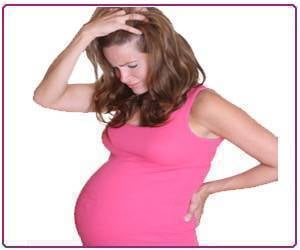 The risk of unplanned pregnancies in the
The report also revealed that 5 percent of all women in the reproductive age experienced unintended pregnancies.
The risk rose according to the strata of society women belonged, for instance women from low-income groups portrayed a five-fold increase in the rate of unplanned pregnancies.
Source-Medindia
Wheezy Toddlers Allergic to Dust Mites Likely to Develop Asthma
 Wheezy toddlers who are allergic to house dust mites are more at risk of developing asthma by the age of 12, according to Australian researchers.
Children aged one - two years with a family history of allergy, who had a positive skin prick test to house dust mites, had a higher risk of developing asthma later in life.
Results showed 75 percent of these children had asthma at aged 12 compared to 36 percent of children without a positive skin prick test.
Lead author Dr Caroline Lodge from theUniversity of Melbourne 's School of Population Health
"Our findings provide researchers with a more targeted group of at risk children, for investigating strategies to prevent asthma later in life," she said.
"House dust mite sensitivity amongst wheezy toddlers could be used as a clinical tool to assist parents in understanding the risk of asthma in their children.
"Although currently there is no known intervention to stop asthma developing, identifying children at higher risk may lead to more tailored treatments of wheeze in this high risk group," Dr Lodge added.
Source-ANI
Lead author Dr Caroline Lodge from the
"Our findings provide researchers with a more targeted group of at risk children, for investigating strategies to prevent asthma later in life," she said.
"House dust mite sensitivity amongst wheezy toddlers could be used as a clinical tool to assist parents in understanding the risk of asthma in their children.
"Although currently there is no known intervention to stop asthma developing, identifying children at higher risk may lead to more tailored treatments of wheeze in this high risk group," Dr Lodge added.
Source-ANI
Arthritis Treatment By Acupuncture
Arthritis is one of the most pervasive diseases and is the leading cause of disability. According to the Centers for Disease Control and Prevention one out of every three Indians (an estimated 70 million people) is affected.
For most people arthritis pain and inflammation cannot be avoided as the body ages. In fact, most people over the age of 50 show some signs of arthritis. Joints naturally degenerate over time. Fortunately, arthritis can often be managed by Acupuncture .
What is Arthritis?
Arthritis isn't just 1 disease; it's a complex disorder that comprises more than 100 distinct conditions and can affect people at any stage of life. Two of the most common forms are osteoarthritis and rheumatoid arthritis. While these 2 forms of arthritis have very different causes, risk factors, and effects on the body, they often share a common symptom—persistent joint pain.
Osteoarthritis(OA) is the most common form of arthritis in India, affecting an estimated 21 million adults. OA begins with the breakdown of joint cartilage, resulting in pain and stiffness.
OA commonly affects the joints of the fingers, knees, hips, and spine. Other joints affected less frequently include the wrists, elbows, shoulders, and ankles. When OA is found in a less frequently affected joint, there is usually a history of injury or unusual stress to that joint. Work-related repetitive injury and physical trauma may contribute to the development of OA. If you have a strenuous job that requires repetitive bending, kneeling, or squatting, for example, you may be at high risk for OA of the knee.
Rheumatoid arthritis(RA) can affect many different joints and, in some people, other parts of the body as well, including the blood, the lungs, and the heart. Inflammation of the joint lining, called the synovium, can cause pain, stiffness, swelling, warmth, and redness. The affected joint may also lose its shape, resulting in loss of normal movement. RA can last a long time and can be a disease of flares (active symptoms) and remissions (few to no symptoms).
Diagnosis and Treatment of Arthritis with Acupuncture
According to Chinese medical theory, arthritis arises when the cyclical flow of Qi in the meridians becomes blocked. This blockage is called, "bi" type pain and is widely in studies and successfully treated using by acupuncture .
Acupuncture have been found to be extremely effective at treating the pain and inflammation associated with all types of arthritis. The acupuncture points that are used depend on if the blockage of Qi (arthritis) is caused by the pathogen wind, cold, damp or damp-heat.
Traditional Chinese Medicine does not recognize arthritis as one particular syndrome. Instead, it aims to treat the specific symptoms that are unique to each individual using a variety of techniques such as acupuncture, to restore imbalances found in the body. Therefore, if 10 patients are treated with ACUPUNCTURE for joint pain, each of these 10 patients will receive a unique, customized treatment with different acupuncture points .
Your acupuncturist will examine you, take a look at the onset of your condition and learn your signs and symptoms to determine your Chinese diagnosis and choose the appropriate acupuncture points and treatment plan.
The Acupuncture Treatment
Acupuncture points to treat Arthritis are located all over the body, not just directly over the affected area. During the acupuncture treatment, tiny needles could be placed along your legs, arms, shoulders, and perhaps even your little toe!
There seems to be little sensitivity to the insertion of acupuncture needles. They are so thin that several acupuncture needles can go into the middle of a hypodermic needle. Occasionally, there is a brief moment of discomfort as the needle penetrates the skin, but once the needles are in place, most people relax and even fall asleep for the duration of the treatment.
The length, number and frequency of treatments will vary. Typical treatments last from five to 30 minutes, with the patient being treated one or two times a week. Some symptoms are relieved after the first treatment, while more severe or chronic ailments often require multiple treatments
Wednesday, 24 August 2011
MoT announces incentives for NABH accredited wellness centres and Ayurveda hospitals
To promote Wellness Tourism as a niche tourism product and encourage wellness activities, the Ministry of Tourism (MoT) has announced incentives for National Accreditation Board for Hospitals & Healthcare Providers (NABH) accredited wellness centres and Ayurveda hospitals. According to a media release, NABH, a constituent board of the Quality Council of India (QCI) provides accreditation to Ayurveda hospitals and wellness centres including spas, Ayurveda centres, Yoga and naturopathy centres, fitness centres, skin care centres, etc.
Commenting on the incentives, Dr. Girdhar J Gyani, Secretary General, Quality Council of India (QCI) and CEO, NABH, said that the initiative by the Ministry of Tourism to provide incentives for NABH accredited wellness centres and accredited ayurveda hospitals will give a tremendous boost to the NABH’s wellness accreditation programme. “Wellness is a part of the Indian culture and has become a global trend. As such, it is essential for destinations here in India to create unique travel experiences that are holistic in nature. It is time that we realized our strength and used it to our advantage.”
Some of the incentives for the accredited entities are:
- Being featured on the Incredible India website.
- Being linked to an accredited centres website from the listings.
- A NABH Mark of Excellence and a MoT approved logo.
- Listing of accredited wellness entities on Incredible India stalls in approved national and international wellness and spa conferences.
- Eligibility to participate in Ministry of Tourism publications and road shows.
- Financial support for all accredited centres up to Rs six lakh per year from the MoT for participation in international Wellness Tourism events duly identified and approved under the existing guidelines for Market Development Assistance (MDA) Scheme for Wellness Tourism Service Providers (WTSP). Under this, financial assistance would be permissible on travel expenses by air from India to any other country and by air/rail from one country to another, in economy excursion class fair and/or charges of the built furnished stall, electricity and water charges etc. subject to a maximum of 75 per cent of the total expenditure or Rs.2.00 lakh, whichever is less to WTSP. Up to three visits for two persons from accredited wellness centres and AYUSH Hospitals to participate in international events can be supported by MoT i.e. up to six lakh per year.
- For Domestic events, four seminars/events in a financial year will be sponsored by MoT with a ceiling of Rs 10 lakh each on a 50:50 sharing basis. Further, for developing publicity material, MoT would be providing financial assistance of 67:33 sharing basis to accredited wellness centres subject to a ceiling of Rs 50 lakh a year.
- All the accredited entities would be eligible to apply for the annual National Tourism Awards under the Wellness & Spa category.
Subscribe to:
Posts (Atom)
Facebook Badge

PAGE COUNTER
